


Original Kashmiri Carpets: How to Identify Genuine Hand-Knotted Rugs vs Imitations »
Introduction »
Original Kashmiri carpets are world-renowned for their exquisite craftsmanship and artistic beauty.
For centuries, these hand-knotted rugs from the Kashmir Valley have been prized worldwide for their distinctive weave and intricate designs, admired by collectors and buyers across continents.
An authentic Kashmiri carpet is like owning a piece of living art – each rug carries the legacy of generations of skilled artisans and a rich cultural heritage underfoot.
It is one of the reasons why everyone loves oriental rugs!
Contact Base »
Rohit Sharma (Call:+919819309474 / Email:contact@carpetsofkashmir.com)
Carpets Of Kashmir: 20, Crush Hall, Ground Floor, The Arcade. World Trade Center, Cuffe Parade. Mumbai – 400 005, India
Every Carpet Comes With An Authentication Certificate »

The Challenges »
However, the very popularity of Kashmiri carpets has led to a flood of imitations in the market. Cheaper, machine-made knock-offs and rugs falsely marketed as “Kashmir silk” often lure buyers with low prices but lack the quality and soul of the genuine article.
In this guide, we’ll explain what makes a Kashmiri carpet “original” – from the hand-knotting and natural silk or wool materials to the traditional dyes and regional motifs that define authenticity.
We’ll also compare original vs imitation carpets in a handy table, provide clear signs to look for when identifying authentic Kashmiri rugs, and answer frequently asked questions for shoppers.
By the end, you’ll know how to confidently spot a genuine hand-knotted Kashmiri rug and understand why investing in authenticity is worth every penny.
Whether you’re an Indian buyer or an international customer, appreciating the real craftsmanship behind Kashmiri carpets will help you make an informed choice.
Trusted brands like Carpets of Kashmir (a third-generation family enterprise based in Mumbai) have long upheld this legacy, providing certified, authentic rugs to clients.
Let’s dive into the world of Kashmiri carpets and learn how to distinguish true hand-knotted masterpieces vs imitations.
Our Showroom At Mumbai »


What Makes a Kashmiri Carpet “Original”?
An “original” Kashmiri carpet isn’t defined just by its place of origin – it’s about how it’s made and the quality ingredients that go into it.
Authentic Kashmiri rugs showcase a combination of handmade craftsmanship, premium natural materials, traditional dyes, health benefits and culturally rooted designs.
Below, we break down the key elements that set genuine Kashmiri carpets apart:
1. Hand-Knotted Craftsmanship »
First and foremost, real Kashmiri carpets are hand-knotted – not tufted, not machine-woven. Each rug is produced on a loom by artisans who tie individual knots of yarn, building the pattern row by row. This painstaking process can take months or even years for a single carpet, depending on its size and complexity.
Kashmiri weavers use the Persian knot (Senneh) technique, a traditional method introduced to Kashmir by Persian artisans centuries agorugroom.inrugroom.in. The knot density is a hallmark of quality: a fine Kashmir silk carpet may have 500+ knots per square inch, enabling extremely detailed patterns.
By contrast, imitations often have a far lower knot count (or none at all if they are tufted rugs). High knot density not only creates sharper designs but also means greater durability – a well-made Kashmiri carpet can last for decades and even become a family heirloom.
Importantly, no part of an original Kashmiri carpet is glued or stamped. In hand-knotted rugs, the design’s back shows the knots clearly; you can actually count them to gauge the fineness. The absence of any canvas backing or latex glue is a strong indicator of authenticity.
Every knot is secured into the foundation, ensuring the rug’s design is locked in for life. This level of craftsmanship simply cannot be replicated by machines or mass-production. It’s the human touch – slight irregularities and all – that gives each Kashmiri carpet its character and value.
2. Pure Silk and Wool Materials »
Authentic Kashmiri carpets are made of premium natural fibers. Traditionally, weavers in Kashmir use either 100% pure silk, 100% pure wool (often fine Merino wool), or a silk–wool blend as the pile material.
The base (warp and weft threads) of the carpet might be silk or cotton, depending on type – for example, a “silk-on-silk” carpet has silk pile on a silk foundation, whereas “silk-on-cotton” uses silk pile knotted onto cotton warps.
Pure mulberry silk from Kashmir is renowned for its lustrous sheen and strength, allowing weavers to tie incredibly fine knots without the yarn breaking. Wool from high-quality sources (like merino sheep) offers warmth, softness, and durability for woolen Kashmiri rugs.
On the other hand, imitation rugs often use cheaper materials – for instance, “art silk” (artificial silk) made of rayon/viscose, or synthetic fibers like polyester and nylon. These materials may look shiny at first but generally have lower resilience and can wear out or break down faster. Genuine silk is as strong as steel for its weight and has a luxurious, soft feel.
A quick fiber test: if you carefully burn a small strand (not recommended on a rug you haven’t bought!), real silk smells like burnt hair and leaves a brittle ash, whereas rayon (fake silk) smells like burnt paper.
While you likely won’t be doing burn tests while shopping, knowing the fiber content is crucial – always verify if a “silk carpet” is pure silk and not a viscose impostor. Authentic retailers like Carpets of Kashmir clearly label their products (silk, wool, or silk-wool blend) and even provide material certifications to assure buyers.
3. Natural Dyes and Vibrant Colors »
Another defining feature of original Kashmiri carpets is their use of natural dyes to create vibrant yet harmonious colors.
Traditionally, Kashmiri artisans sourced dyes from plants, minerals, and other natural materials – indigo for blues, madder root for reds, pomegranate or turmeric for yellows, etc.
These natural dyes give rich jewel tones (like sapphire blue, ruby red, emerald green) as well as soft, muted hues. The colors in an authentic rug tend to have a subtle warmth and depth, and they age beautifully over time instead of fading harshly. For example, an antique silk Kashmiri rug will often develop a gentle patina that only enhances its charm.
Imitation carpets may use chemical dyes that sometimes appear too stark or synthetic-looking.
One tell-tale sign can be the uniformity of color – handmade rugs with natural dyes might show very slight variations (abrash) in shade, which actually add to their character, whereas machine-made ones could have flat, even color.
Also, natural dyes are typically colorfast; if you rub a damp cloth on the pile, a genuine naturally-dyed rug shouldn’t bleed color easily.
The careful dyeing process in Kashmir ensures longevity of the rug’s palette, which is why authentic Kashmiri carpets from decades ago still retain vibrant, jewel-like color tones without losing their elegance.
4. Intricate Regional Motifs and Designs »
Walk into our carpet showroom and a Kashmiri carpet will likely catch your eye by its intricate design. The patterns on these rugs draw from a blend of Persian and local Kashmiri artistry, a fusion that dates back to when Persian master weavers first brought the craft to Kashmir in the 15th century.
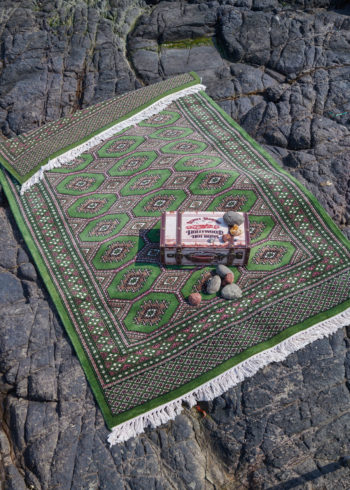
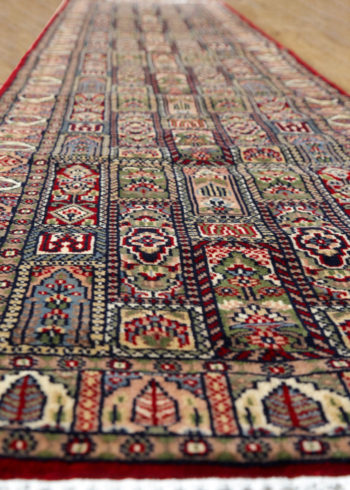
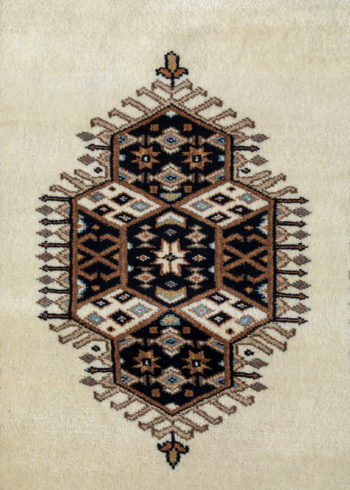
Authentic Kashmiri carpets often feature flowing floral motifs, geometric, vines, and tree-of-life patterns, as well as pictorial designs and the famous paisley (boteh) motif – a teardrop shape symbolizing fertility and life.
Another signature motif is the Chinar leaf, inspired by the Oriental plane tree cherished in Kashmir. These designs are not random; they are a symbolic representation of Kashmiri culture – it’s often said that a home is incomplete without a soul, and a Kashmir carpet is that soul, embodying warmth and hospitality.
Each region or family of weavers might have slight variations in style, meaning every genuine Kashmiri rug has a unique touch. The composition is well-balanced and symmetrical (especially in medallion or all-over floral designs), showcasing the weaver’s meticulous planning and execution.
In contrast, imitation rugs may have sloppier patterns – you might spot breaks in symmetry, fuzzy detailing, or even pixelated prints in machine-made versions. Authentic rugs also typically carry a border with intricate detailing that frames the central field; the corners and transitions are expertly done.
If you compare side by side, a genuine hand-knotted Kashmiri design will display a level of detail and finesse that a mass-produced carpet simply cannot match. The motifs in real Kashmiri carpets aren’t just decorative; they tell a story of a region’s artistry handed down through generations.
Original Kashmiri Handmade Silk Carpets For Living Rooms »
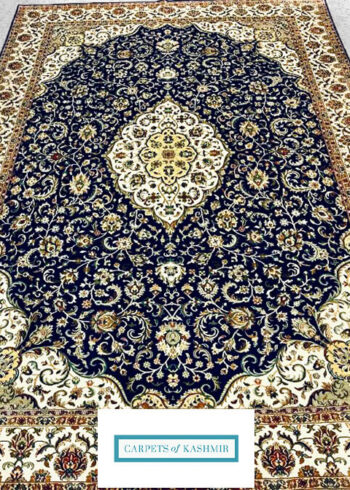
Pure Silk
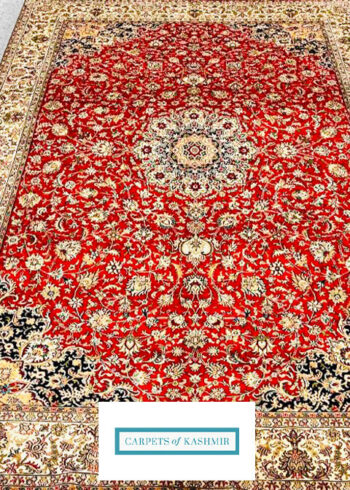
Pure Silk
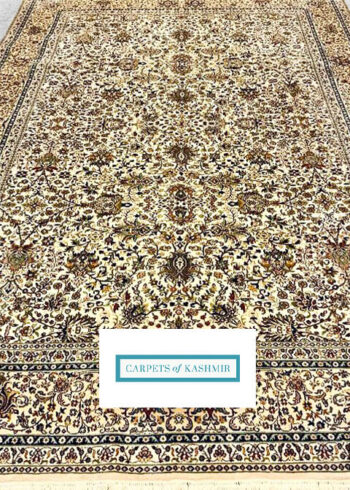
Pure Silk
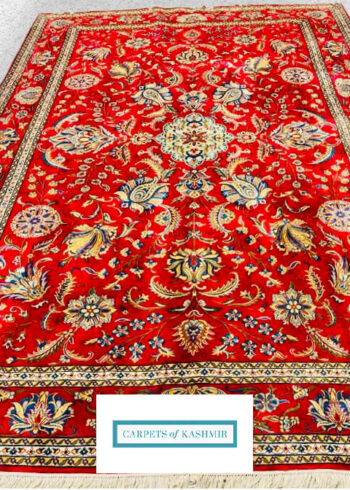
Pure Silk
Now that we know the hallmarks of an original Kashmiri carpet – hand-knotting, natural silk/wool, natural dyes, and traditional motifs – let’s directly compare how these differ from the imitations.
Original vs Imitation: Key Differences in Kashmiri Carpets »
Not every rug with a “Kashmir” label lives up to the name. Many cheap imitations are sold in markets and online, so it’s important to know the differences at a glance.
Below is a comparison of authentic Kashmiri carpets vs. imitation rugs (fake or mass-produced pieces often marketed as “Kashmiri”):
Original vs Imitation: Key Differences in Kashmiri Carpets
Not every rug sold as “Kashmiri” is truly hand-knotted or made in Kashmir. Use this comparison table to quickly understand the key differences between an authentic Kashmiri carpet and a mass-produced imitation.
| Aspect | Authentic Kashmiri Carpet | Imitation Carpet |
|---|---|---|
| Weaving Method | Hand-knotted on a loom by skilled artisans. Every knot is tied by hand, row by row. The back of the rug clearly shows individual knots, with no mesh or glue. | Machine-made (power loom) or hand-tufted. Often produced quickly in bulk. Backing may be canvas or latex, with no visible hand-tied knots. |
| Knot Density | High knot count. Fine silk carpets can exceed 500 knots per square inch, allowing very sharp, detailed patterns and excellent durability. | Low or no knot count. Tufted rugs have no actual knots. Patterns are less detailed and can look blurry or blocky on close inspection. |
| Materials | 100% natural fibres: pure silk, pure wool (often fine Merino), or a silk–wool blend. Soft, rich handle and natural sheen. | Cheaper fibres: viscose “art silk”, polyester, acrylic or mixed synthetics. Can feel plasticky, overly shiny and wear out faster. |
| Dyes & Colours | High-quality or natural dyes. Rich, jewel-like tones with depth. Colours age gracefully and may show slight, beautiful variations (abrash). | Often uses harsh synthetic dyes. Colours can look flat, too bright or artificial and may fade or bleed more quickly over time. |
| Design Details | Intricate, flowing motifs: florals, paisleys, vines, tree-of-life, Chinar leaves. Balanced, well-planned layout with crisp detailing. | Simplified or repetitive patterns. Lines may be jagged or fuzzy, sometimes even printed. Overall look lacks the finesse of true hand-knotted work. |
| Fringe & Edges | Fringe is part of the rug’s foundation – the warp threads extended and knotted. Side edges are hand-bound and integrated with the structure. | Fringe is usually sewn or glued on after weaving. Side edges may have machine-stitched binding, separate from the rug’s structure. |
| Feel & Performance | Feels “alive” underfoot. Wool offers warmth and resilience; silk feels cool, smooth and luxurious. Made to last decades with proper care. | May feel stiff, slippery or flat. Fibres break down faster, especially in high-traffic areas. Lifespan and ageing are much poorer. |
| Price & Long-Term Value | Higher initial cost, reflecting months of skilled labour and premium materials. Holds value as an art piece and can become a family heirloom. | Lower price point, focused on quick turnover. Rarely holds resale value and is treated more as a disposable decor item. |
| Authenticity Proof | Sold by established dealers with clear documentation and authenticity assurance, often including detailed information on knot count, materials and origin. | Usually no meaningful documentation. Labels may be vague or misleading, and origin or materials are often not transparently disclosed. |
Original Kashmiri Handmade Wool Carpets For Coffee Table »
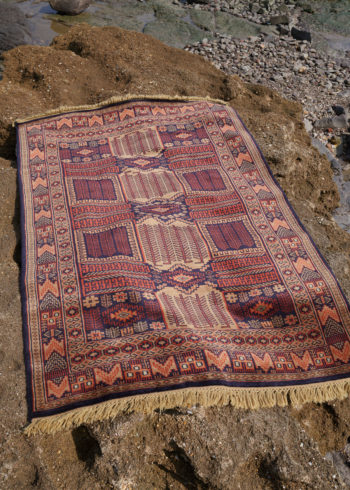
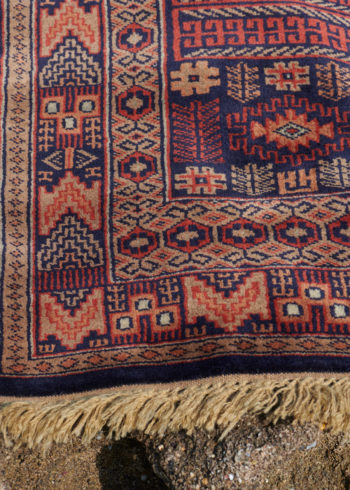
Pure Wool
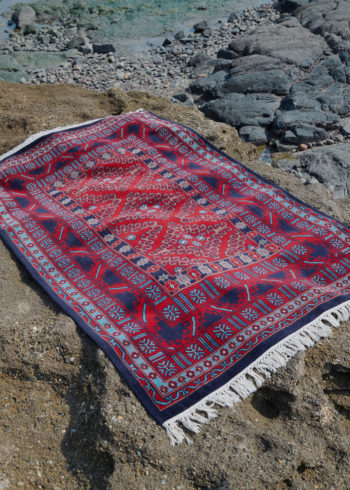
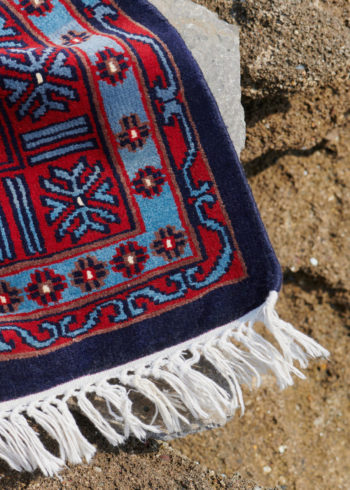
Pure Wool
Pure Wool
Pure Wool
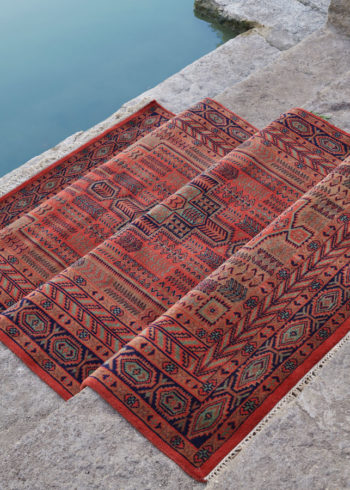
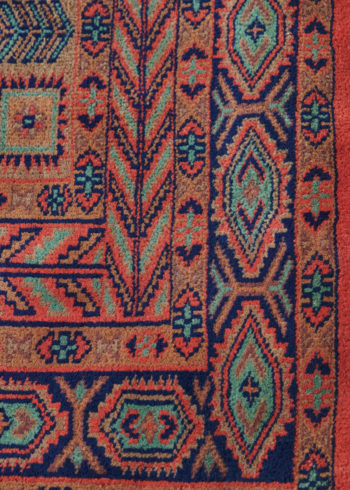
Pure Wool
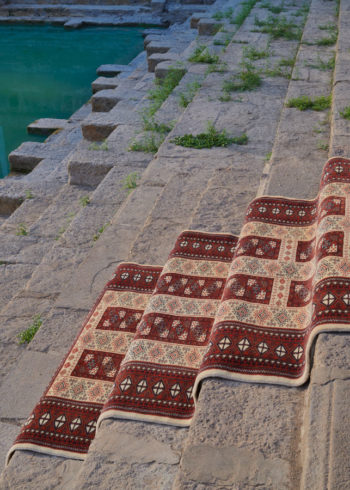
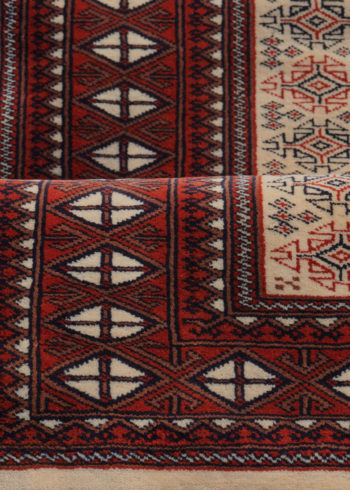
Pure Wool
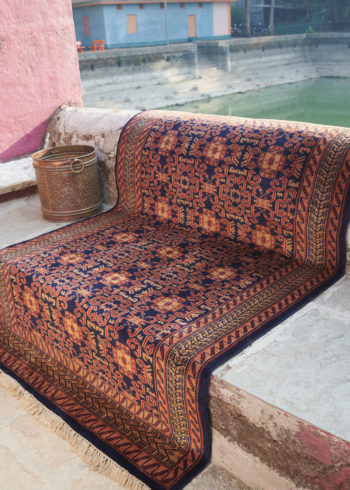
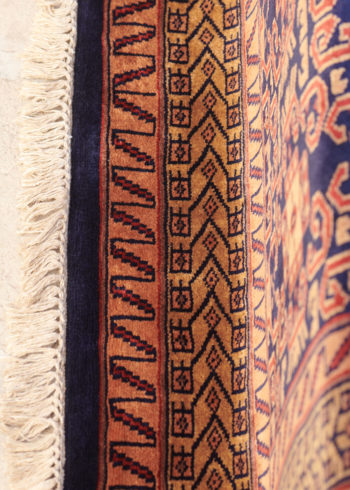
Pure Wool

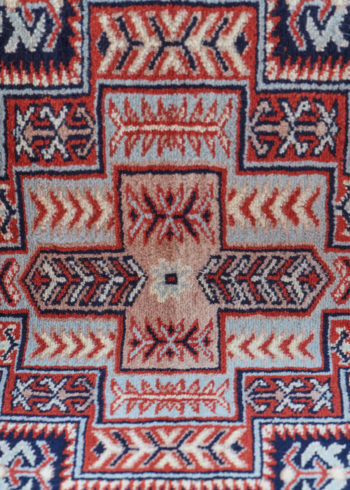
Pure Wool
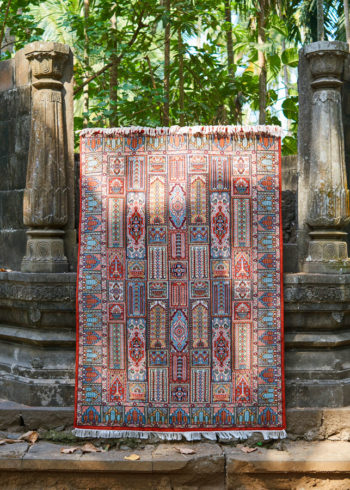

Wool-Silk
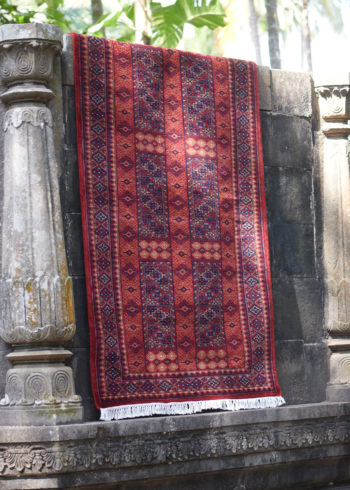
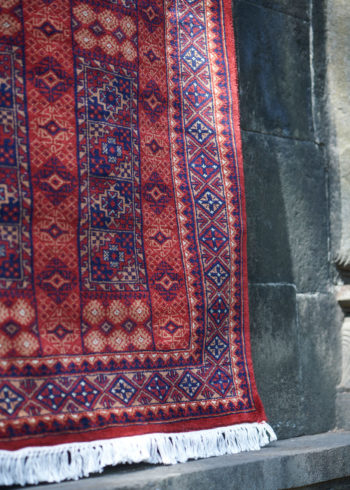
Pure Wool
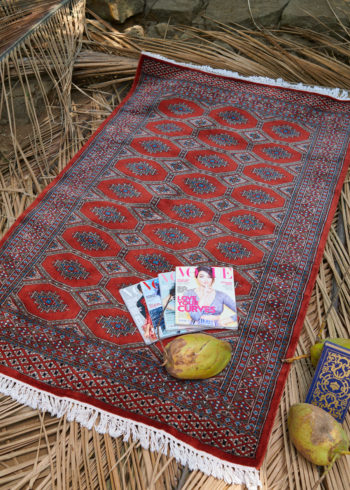
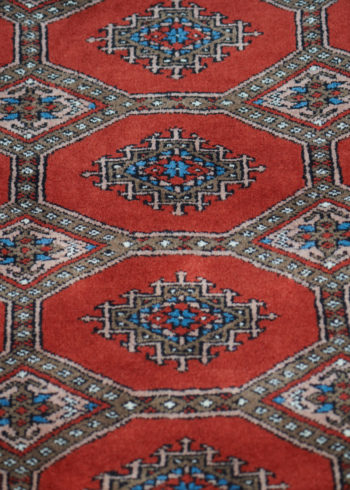
Pure Wool
Pure Wool
Pure Wool
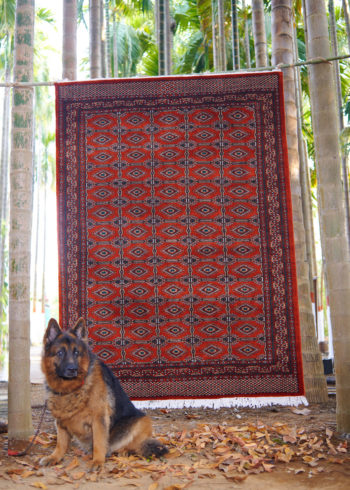
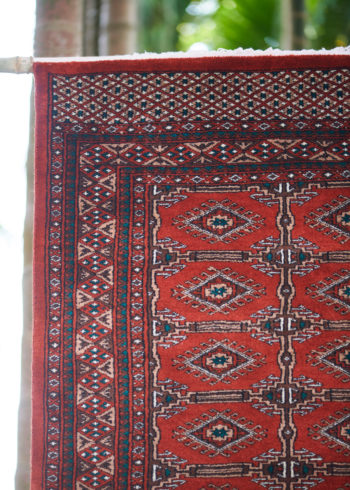
Pure Wool
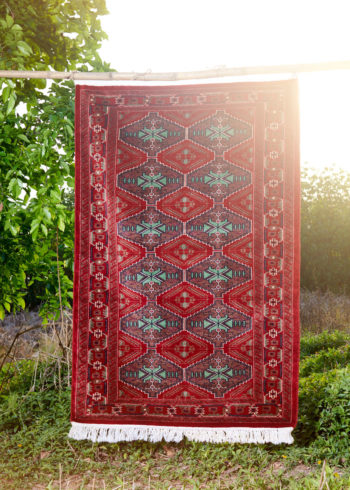
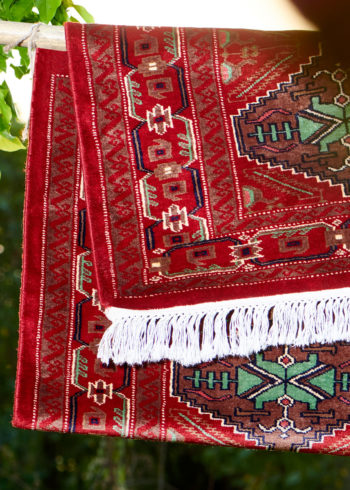
Pure Wool
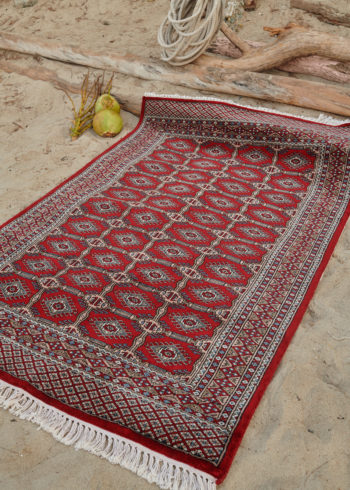
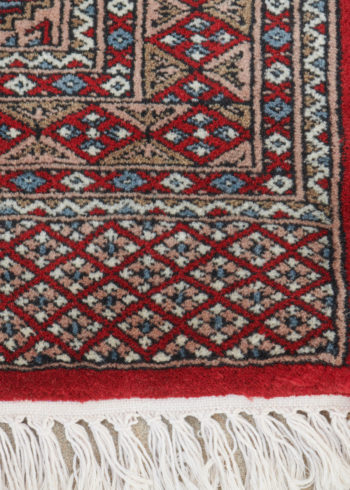
Pure Wool
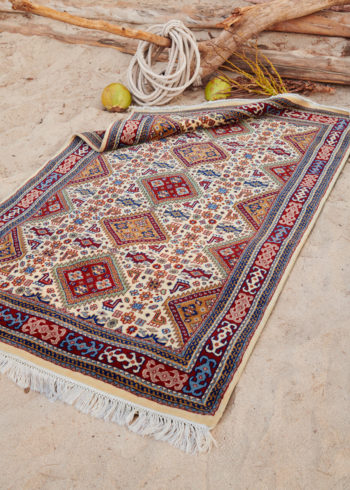
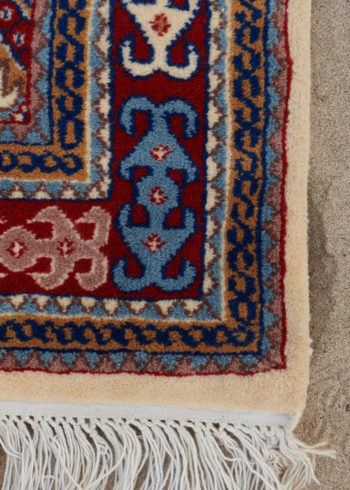
Pure Wool
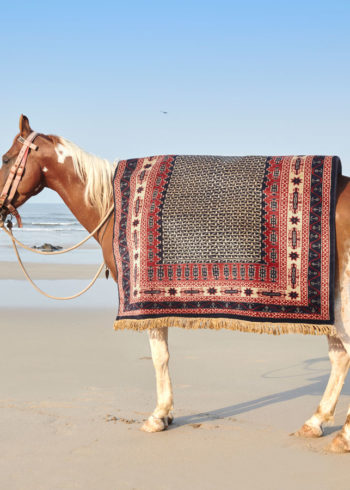
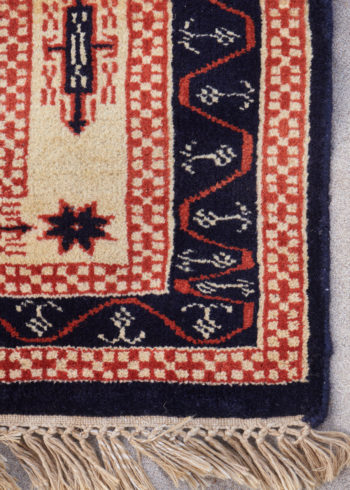
Pure Wool
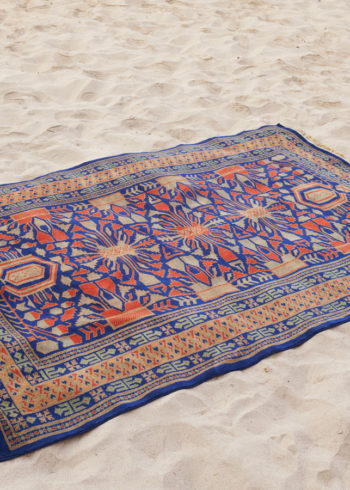
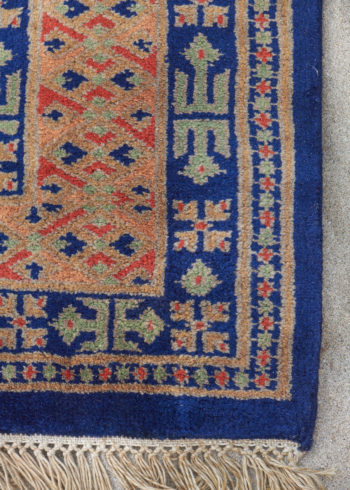
Pure Wool
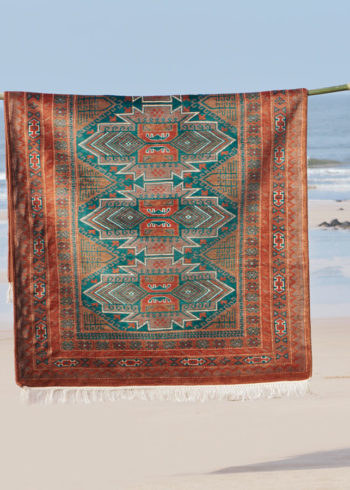
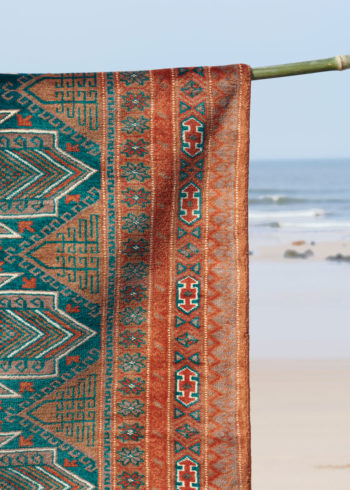
Pure Wool
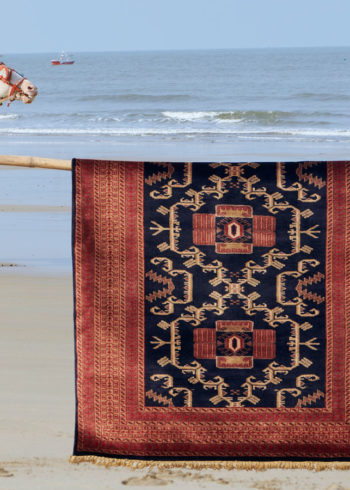
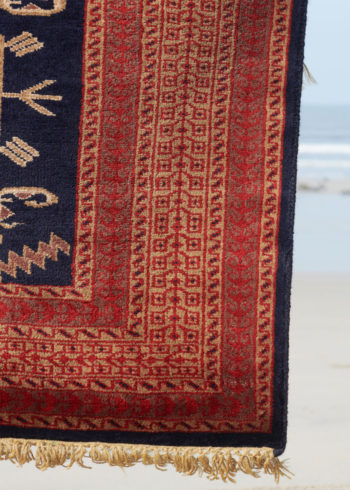
Pure Wool
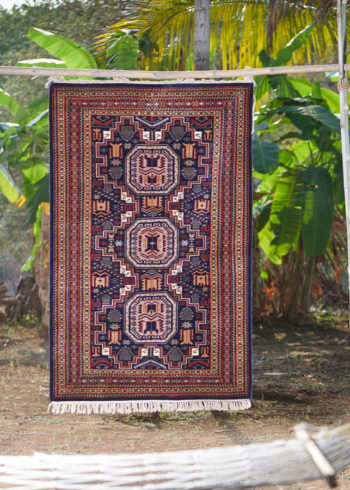
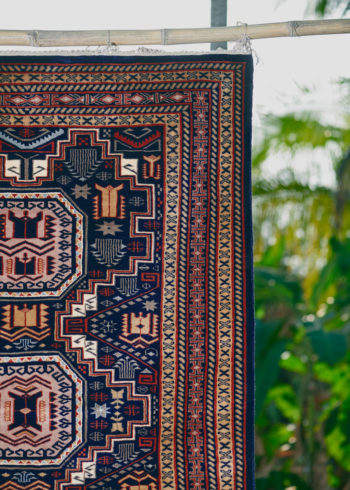
Pure Wool
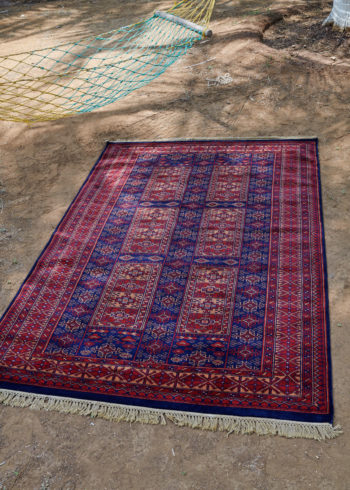
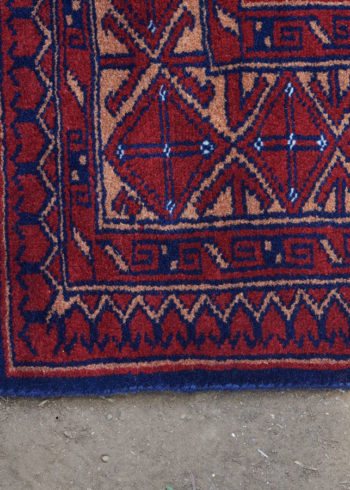
Pure Wool
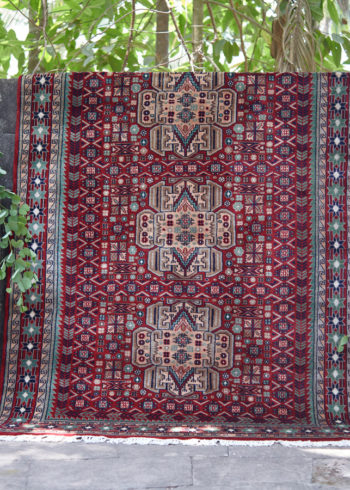
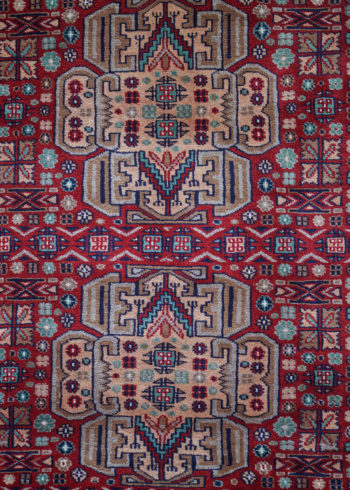
Pure Wool
Signs of an Authentic Kashmiri Rug »
When shopping for a Kashmiri carpet (whether in a showroom or online), keep the following identification tips in mind.
These are practical signs that a rug is a genuine hand-knotted Kashmiri creation and not a cheap imitation:
Material Check: Examine the carpet’s fibers by touch and sight. Authentic Kashmiri rugs made of 100% pure silk or wool will feel rich and warm (wool) or cool and smooth with a subtle sheen (silk). You may notice a soft, luxurious feel and even slight irregularities in texture – a good sign for something handcrafted.
If the pile feels overly glossy, limp, or plastic-like, it could be artificial silk or synthetic. Also look at the back of the rug for any glue or canvas; a hand-knotted rug won’t have these, whereas a tufted fake will often have a cloth backing concealing rough material like latex glue.
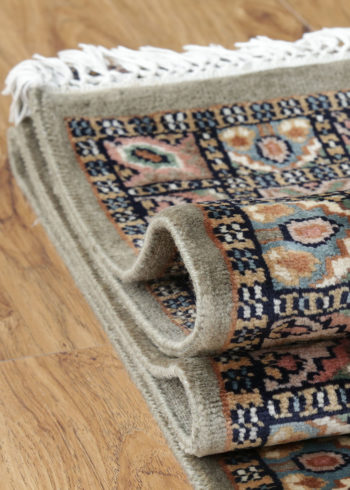
Flip and Inspect the Knots: Flip the rug over and inspect the underside. In a genuine hand-knotted Kashmiri carpet, you will see a maze of tiny knots forming the mirror image of the design on the front.
The knots should be relatively uniform in size, tightly packed, and you might even spot slight unevenness (since they’re hand-tied). Try gently running your finger along the back – you should feel the ridges of knots. If instead you see a mesh or fabric backing, or the pattern is printed/painted on the back, it’s not an authentic Kashmiri hand-knotted rug.
High knot density is key – authentic rugs have hundreds of knots per square inch, giving the backside a fine canvas-like appearance, whereas fakes have far fewer or none (in the case of printed rugs).
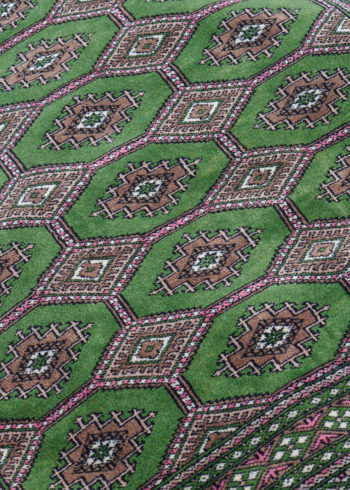
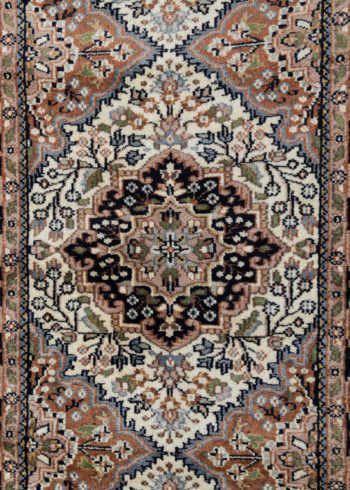
Intricate, Crisp Design: Look closely at the design from the front. Authentic Kashmiri carpets display intricate and well-executed patterns – whether it’s scrolling florals, detailed medallions, or paisley motifs, the artwork should appear crisp and refined. The outlines of motifs will be clear and curved lines smooth, thanks to the high knot count.
In imitations, you might notice jagged lines, color bleeding between areas, or motif shapes that look distorted. Also, check if the pattern has any obvious mistakes or asymmetry where it shouldn’t – handmade rugs do have minor imperfections, but the overall design will remain balanced and intentional, not clumsy. If a rug’s design looks too simplistic or has pixelated edges (as if it were digitally printed), it’s likely not a genuine Kashmiri hand-knotted piece.
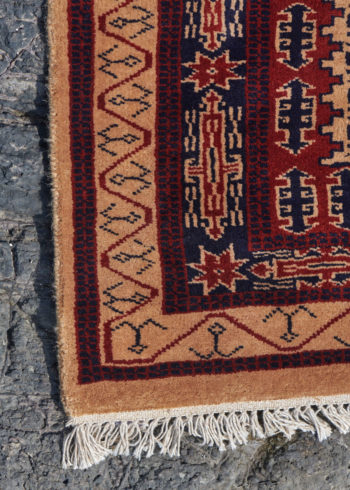
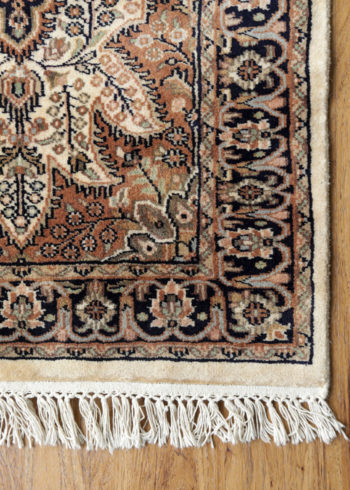
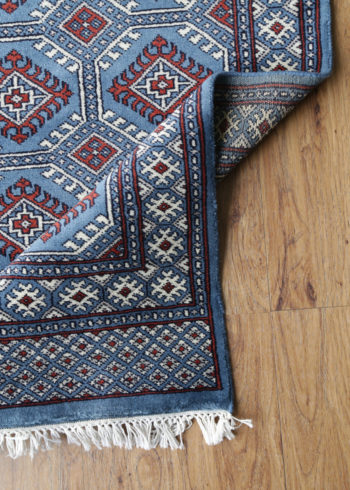
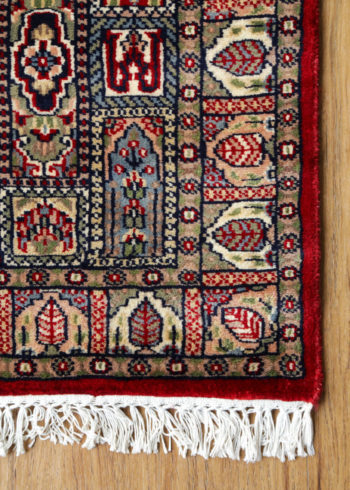
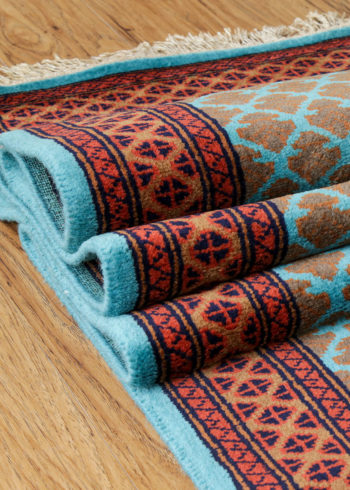
Fringe and Edges: Pay attention to the fringe on the ends of the carpet. On a true hand-knotted rug, the fringe isn’t just decorative – it’s actually the warp threads of the rug that have been left unwoven and knotted to secure them.
This means the fringe on an authentic Kashmiri carpet will be directly connected to the rug’s structure, often the same color/material as the foundation. Tug it gently; it should be firmly part of the carpet. In contrast, many fake or mass-produced rugs attach a faux fringe afterward (by sewing or gluing it on).
If you see the fringe starts from a seam or looks artificially applied, walk away – real Kashmiri rugs don’t have separate fringe. Similarly, check the side edges (selvages) – they should be hand-bound in yarn, not a machine-stitched binding.
Authenticity Labels or Certificates: Reputable Kashmiri carpet sellers will provide proof of authenticity. For example, we at Carpets of Kashmir issue a RugAssure certificate with each rug, certifying the knot count, material (silk or wool), type of dyes used, and that the piece is hand-knotted in Kashmir.
These documents, often endorsed by the Government of India, provide peace of mind that you are buying the real thing. If a seller cannot furnish any authenticity documentation for a “Kashmiri silk rug” they’re selling, that’s a warning sign.
Price and Credibility: Lastly, use common sense about price. An original Kashmiri carpet is a work of art that can take many months of labor and high-quality materials to create – it will not be “dirt cheap.”
If someone offers a “pure silk Kashmir carpet” at a fraction of the expected price, be very skeptical. While bargains exist, prices that seem too good to be true usually indicate a fake or a vastly inferior product. It’s better to purchase from credible sources – dealers or brands with a good reputation (check reviews, years in business, etc.).
Established outlets like Carpets of Kashmir have been in business for decades, offer transparency in what you’re buying, and provide after-sales support, so you can trust the authenticity. Remember, a genuine Kashmiri rug is an investment; you’re paying for lasting quality and cultural artistry.
By keeping these signs in mind, you’ll significantly reduce the chances of being duped by imitations. Next, let’s explore a bit about the heritage behind these carpets and why their authenticity is so meaningful.
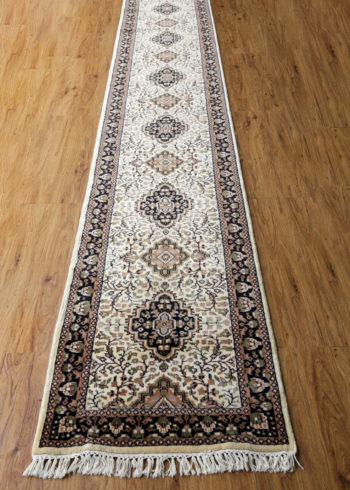
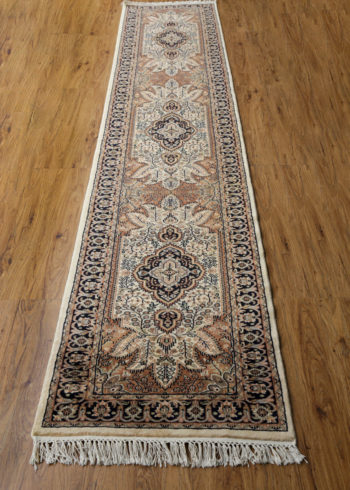
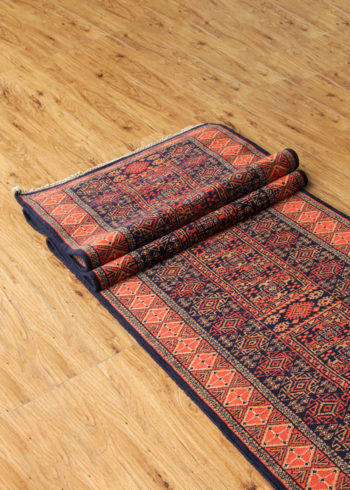
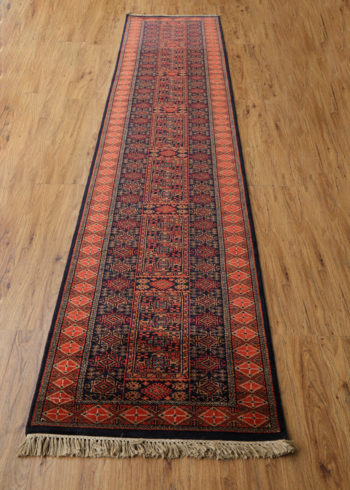
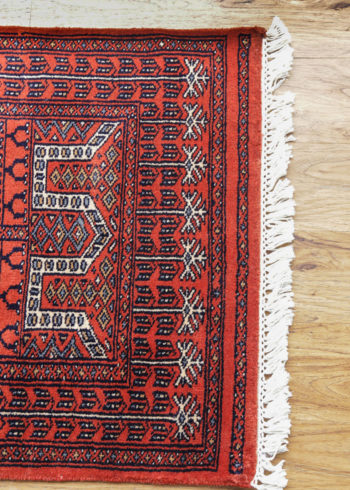
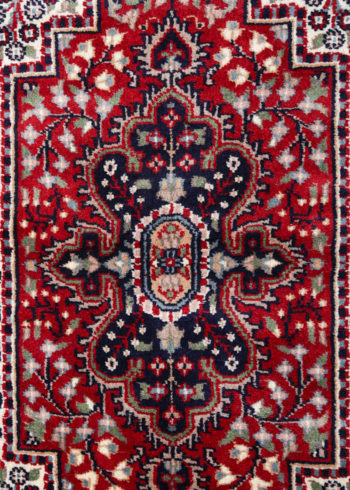
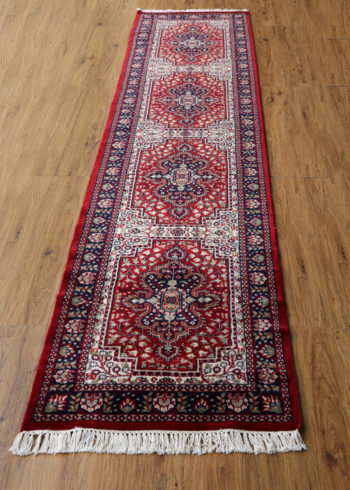
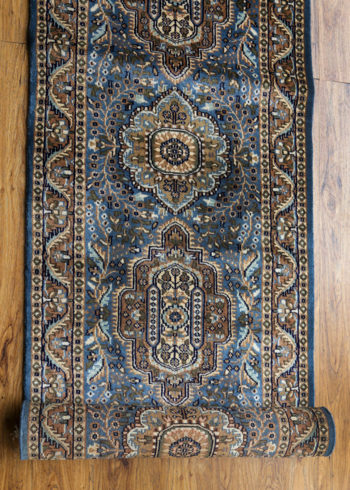
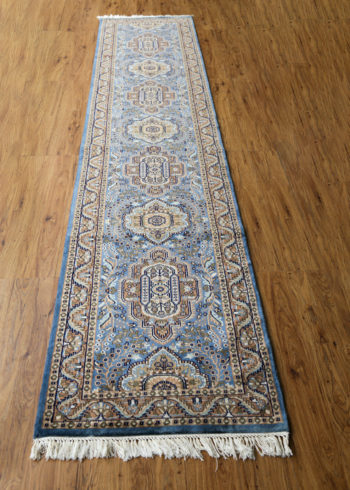
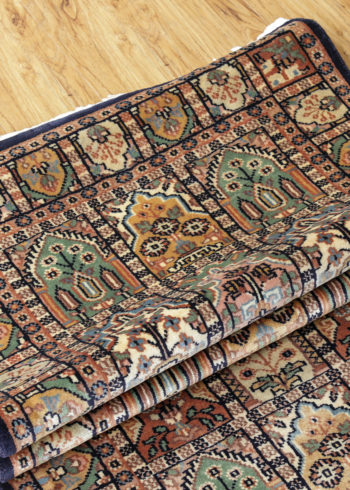
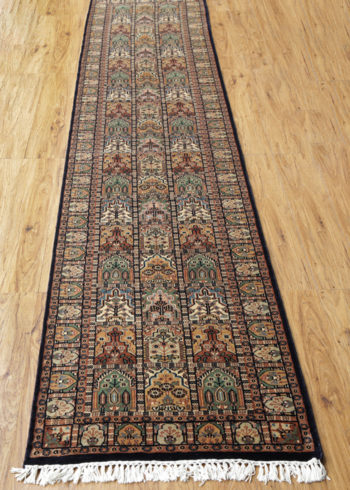
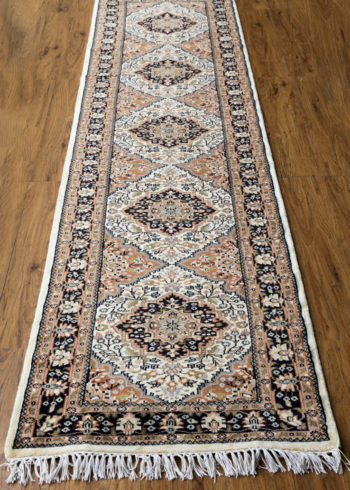
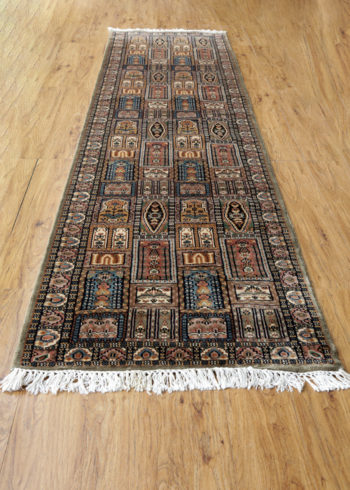
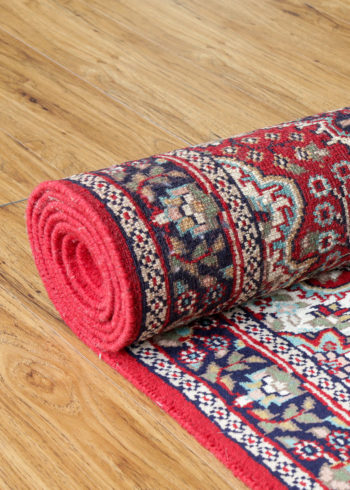
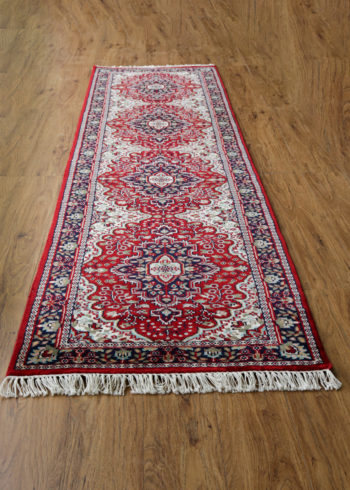
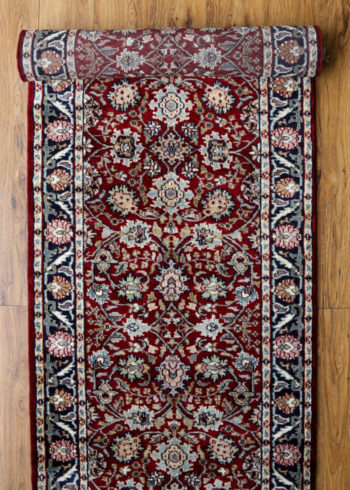
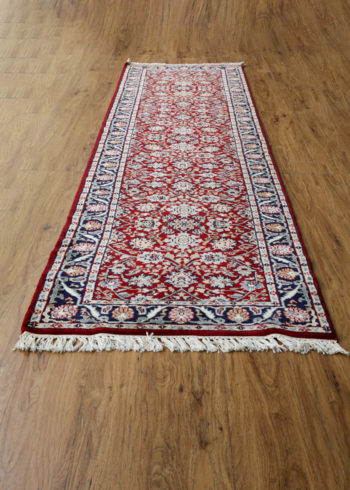
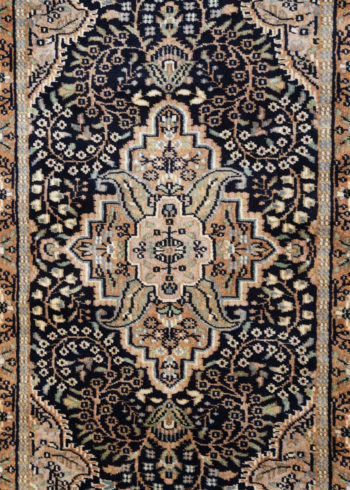
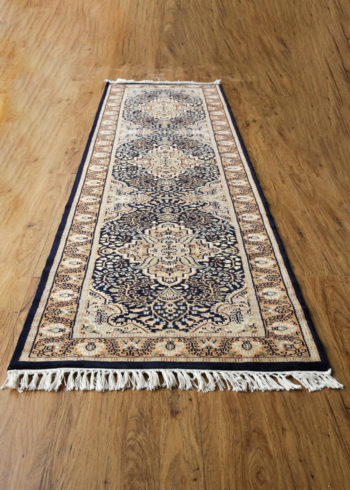
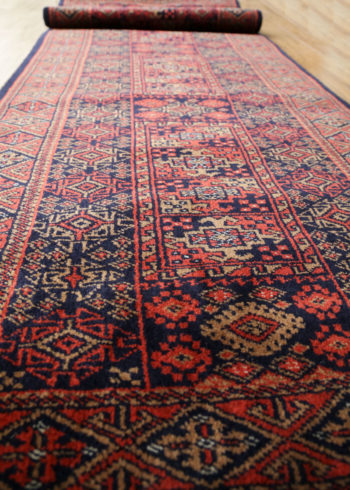
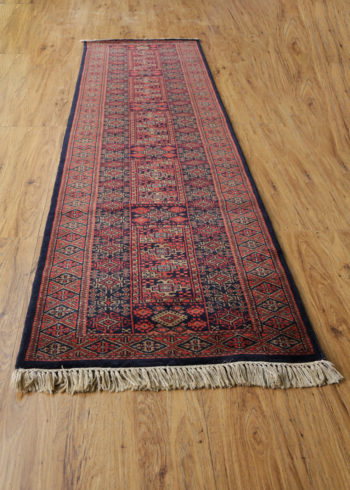
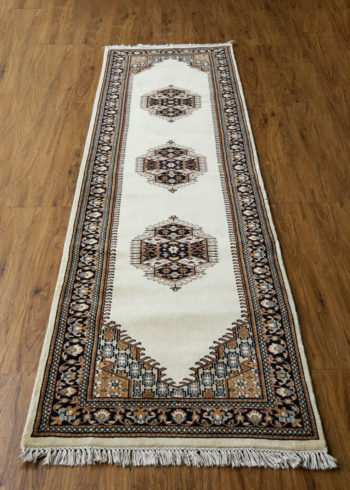
Original Kashmiri Handmade Corridor & Passageways Runners »
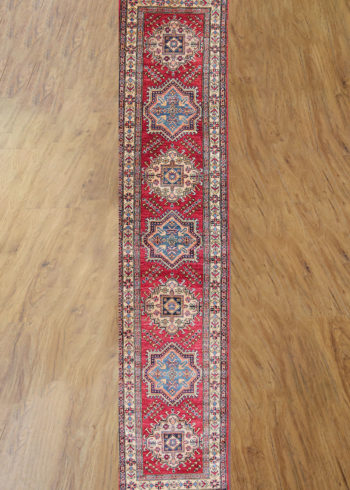
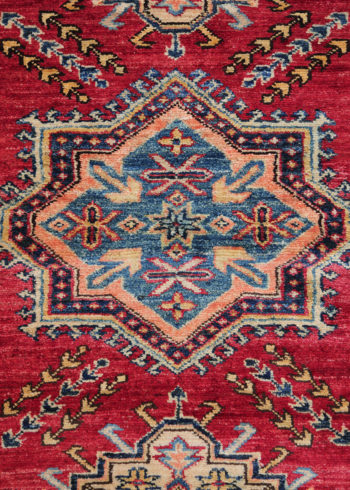
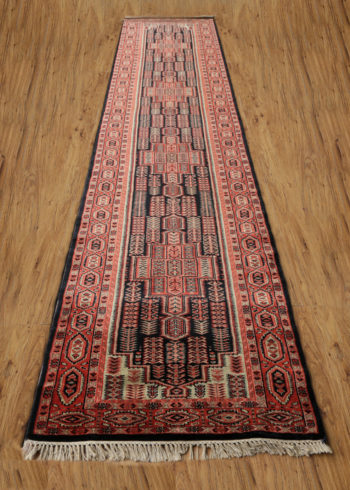
Pure Wool
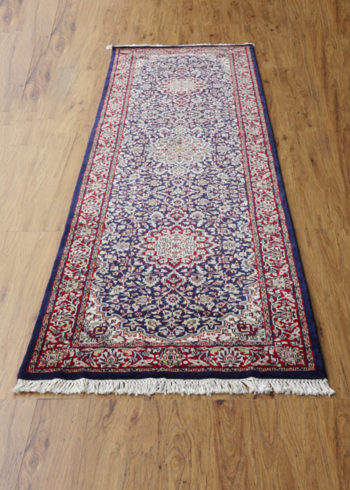
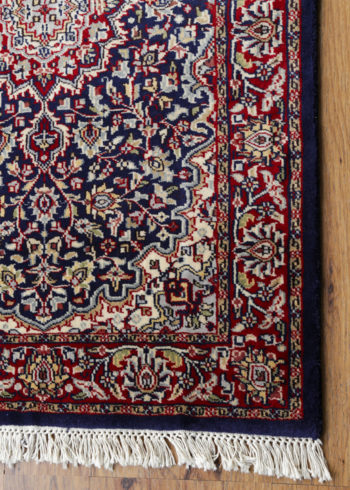
Pure Wool
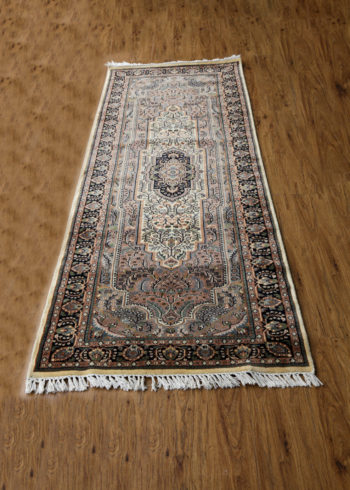
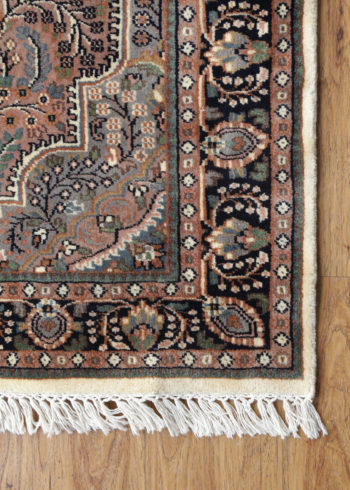
Wool-Silk
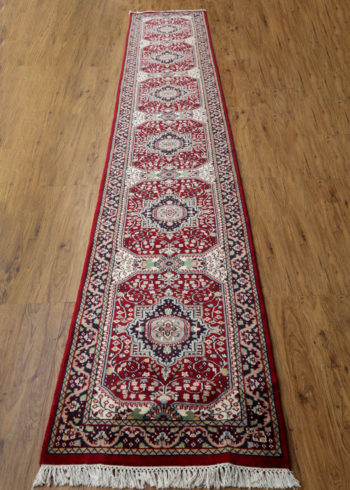
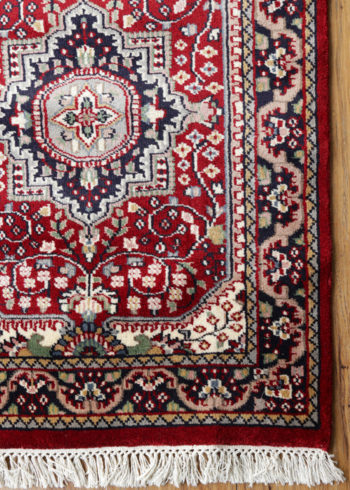
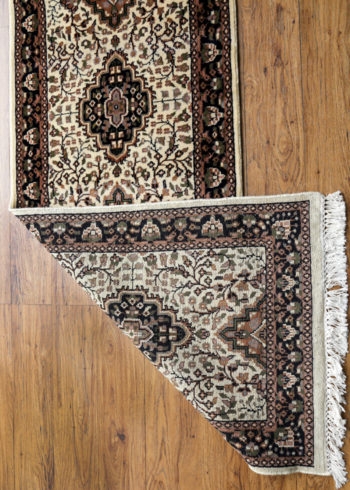
Wool-Silk
Wool-Silk
Wool-Silk
Wool-Silk
Wool-Silk
The Unmatched Legacy of Kashmiri Carpet Craftsmanship »
The art of carpet weaving in Kashmir is not just a business – it’s a centuries-old legacy of craftsmanship that has few parallels in the world. Understanding this legacy helps appreciate why authentic Kashmiri carpets are so special.
1. Historical Roots: Carpet weaving in Kashmir is believed to have blossomed under Persian influence. One historical account credits Hazrat Mir Syed Ali Hamdani, a 14th-century Sufi saint from Persia, with introducing skilled weavers and the craft of knotted carpets to the Kashmir Valley.
Later, in the 16th and 17th centuries, the Mughal emperors (who loved Persian carpets) patronized Kashmiri weaving, blending Persian designs with local art. Over time, Kashmir developed its own style, known for exquisite silk carpets and intricate motifs.
This cross-cultural genesis means every Kashmiri carpet carries a piece of history – motifs like the tree-of-life, paisleys, and floral trellises harken back to designs that enchanted royals and travelers of bygone eras.
2. Generational Craft: The making of Kashmiri carpets is typically a family affair. Techniques and patterns are passed down through generations, often from father to son as a closely guarded skill.
Weavers take immense pride in their work – tying knot after knot for hours a day is as much a meditation as it is a livelihood. Many of today’s master weavers can trace their lineage in the craft back several generations.
When you buy an authentic rug, you support these artisan families and help keep their knowledge alive. Unfortunately, due to various economic pressures, this heritage has faced challenges (for instance, a decline in exports or competition from machine-made goods).
This makes it all the more vital to cherish and promote the handmade authenticity that sustains the craft.
3. Cultural Significance: In Kashmiri culture, a fine carpet is more than decor – it’s often considered a symbol of hospitality and prestige. There’s a local saying that a home is incomplete without a Kashmir carpet, underscoring its role as the “soul” of a well-appointed home.
These rugs have traditionally been part of important life events – families might gift or hand down carpets during weddings or pass them to children as heirlooms. Globally, Kashmiri carpets have adorned palaces, museums, and high-end homes, standing shoulder to shoulder with Persian rugs in terms of esteem.
The timeless elegance and durability of a Kashmiri silk carpet, for example, mean it can literally last generations, with stories and footfalls of each era woven into it.
4. Brands Upholding the Legacy: Today, a number of initiatives and brands are working to preserve this unparalleled craftsmanship.
The Indian government, through the Geographical Indication (GI) registry, has implemented the labeling and QR-code system to ensure that when you buy a “Kashmir carpet,” you’re getting the real thing. This protects not only consumers but also the artisans’ livelihood by curbing fakes. Likewise, esteemed companies like Carpets of Kashmir play a crucial role.
As a third-generation manufacturer of authentic Kashmiri rugs, Carpets of Kashmir (based in Mumbai’s World Trade Center) has spent over 30 years crafting and curating some of the finest hand-knotted carpets for clients around the world.
We uphold strict quality standards – from sourcing pure silk and merino wool to employing skilled weavers – ensuring each rug is worthy of the “Kashmir” name. Every piece from their showroom comes with authenticity certificates and the RugAssure quality guarantee, underscoring their commitment to this heritage.
As they proudly note, each rug “tells a story of tradition, craftsmanship, and timeless elegance,” reflecting the rich heritage of Kashmir in every knot.
In an era of mass production, the legacy of Kashmiri carpets stands out as a beacon of artisanal excellence.
By choosing an original over an imitation, you are not only acquiring a rug of superior beauty and lifespan, but also supporting the continuation of a cultural art form. Now, let’s address some common questions buyers often have about Kashmiri carpets.
Our Certificates, Memberships & Govt. Registrations »


FAQs on Original Kashmiri Carpets »
Are Kashmiri carpets really handmade?
Yes. Authentic Kashmiri carpets are fully handmade and hand-knotted on a loom. Every single knot is tied by an artisan, row by row. This is why the back of a genuine rug shows clear knots and why each piece takes months to complete.
How much does an original silk Kashmiri carpet cost?
Pricing depends on size, knot density and design. Small pure silk Kashmiri carpets start in the premium bracket and larger, very fine pieces can go much higher. At Carpets Of Kashmir, we guide you on quality versus price so you understand exactly what you are paying for.
How can I verify that a Kashmiri rug is authentic?
Check the back for dense, hand-tied knots, not a cloth or rubber backing. Look at the fringe – it should be part of the foundation, not stitched on. Ask for a written certificate mentioning hand-knotting, material (silk or wool) and origin. At Carpets Of Kashmir, every rug comes with clear authenticity documentation.
What is the difference between real silk and artificial silk rugs?
Real silk is a natural fibre with a deep, soft sheen and very high strength, allowing extremely fine knotting. Artificial silk (often viscose) is cheaper, less durable and tends to lose its shine and structure faster. We clearly label our carpets as pure silk, wool or silk–wool blend so there is no confusion.
How long do authentic Kashmiri carpets last?
With normal home use and basic care, a genuine hand-knotted Kashmiri carpet can last for decades and often becomes a family heirloom. Regular vacuuming, rotating the rug and professional cleaning when needed will keep it in excellent condition. Many clients at Carpets Of Kashmir pass their rugs down to the next generation.
Conclusion »
In conclusion, original Kashmiri carpets represent the pinnacle of rug-making artistry – each one is a handmade masterpiece interweaving skill, tradition, and beauty. By understanding the differences between genuine hand-knotted rugs and their imitations, buyers can make informed decisions and avoid falling for fakes.
Remember to check for those tell-tale signs of authenticity: the hand-knotted knots, quality silk or wool, natural dyes, integrated fringe, and proper certifications. When you invest in an authentic Kashmiri carpet, you’re not just buying a floor covering; you’re acquiring an heirloom laden with cultural heritage and human touch.
As you consider adding one of these rugs to your home or collection, we encourage you to appreciate the craftsmanship and insist on authenticity. Reputable sources like Carpets of Kashmir make this easier – with their long-standing legacy and commitment to genuine quality, they ensure you get a rug that is 100% the real thing, complete with authenticity documents and the assurance of a fair price.
An original Kashmiri carpet will not only elevate your decor with its luxurious look and feel, but also bring the spirit of Kashmir’s artistic tradition into your space. In a world of machine-made mediocrity, owning an authentic hand-knotted Kashmiri rug is truly owning a timeless treasure.
Enjoy the splendor and warmth it brings, knowing that you’ve chosen authenticity over imitation – a decision that supports the artisans and preserves a beautiful art form for future generations.
