

Oriental Rug Appraisal: How to Determine the Value of Your Rug

Rohit Sharma, Managing Partner and Rug Expert, sharing over 30 years of Kashmiri craftsmanship insights.
Determining the market value of an oriental rug is a process that requires both technical knowledge and decades of experience. Oriental rugs are a popular and enduring home decor choice, and they can also be a significant financial investment.
Whether you’re looking to buy or sell a rug, it’s important to have a good understanding of its value. In this article, I will take you through the professional process of oriental rug appraisal and the specific metrics I use to determine the value of your rug.
If you are looking to commission a specific piece but are unsure of the price, start with our helpful custom carpet cost overview. Understanding the difference between hand-knotted and machine-made carpets is the first step in valuation; hand-knotted versions typically last significantly longer and appreciate in value due to their superior craftsmanship.
At Carpets of Kashmir, we have been crafting some of the finest oriental rugs for 40+ years. We invite you to visit our well-stocked showroom featuring over 2,000+ ready in-stock carpets at the World Trade Center, Mumbai, where we provide expert consultations daily.
An Infographic »
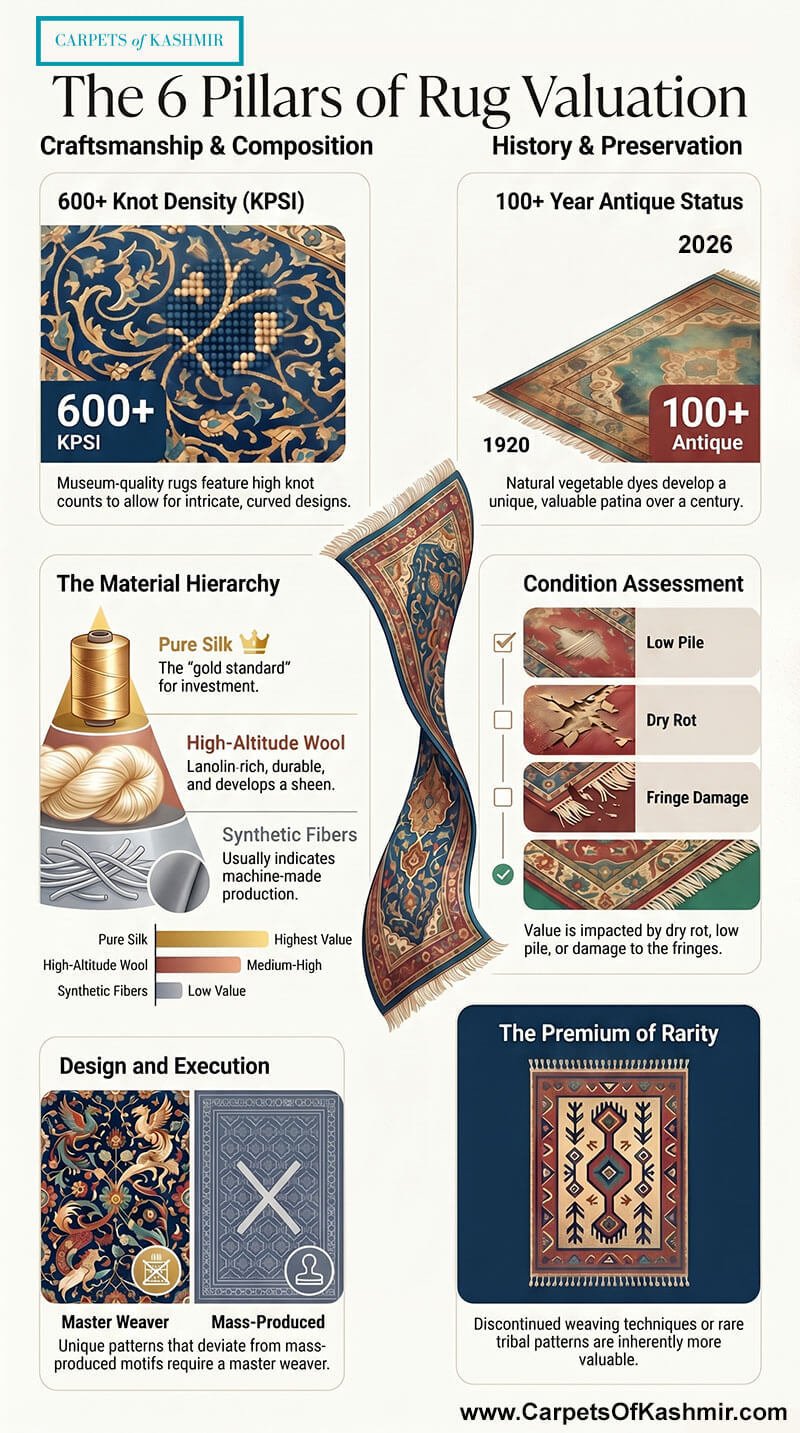
The 6 Pillars of Rug Valuation
When I conduct an appraisal at our Mumbai showroom, I evaluate these six key factors:
1. Material and Fiber Quality
| Material Type | Valuation Impact | Expert Note from Rohit Sharma |
|---|---|---|
| Pure Silk | Highest | “Silk-on-silk” rugs are the gold standard for investment. |
| High-Altitude Wool | Medium-High | Lanolin-rich wool ensures the rug survives for generations. |
| Synthetic Fibers | Low | Rarely hold value; often indicate machine-made production. |
2. Knot Density (KPSI)
The number and density of the knots are critical. Higher knot counts (such as 600+ KPSI) allow for more intricate designs and represent months or years of human labor, significantly increasing the rug’s value.
3. Age and Provenance
- Antique Rugs
- Older rugs (100+ years) are often more valuable, especially if they use natural vegetable dyes that have developed a unique patina.
- Contemporary Rugs
- Value is driven by current labor costs and the reputation of the weaving house.
4. Condition
Rugs in pristine condition are obviously more valuable. However, a rare antique with minor wear can still be worth more than a brand-new commercial rug. I look for signs of dry rot, low pile, or fringe damage.
5. Design and Execution
Intricate and well-executed designs require a master weaver. Rugs with “Information Gain”—unique patterns that deviate from mass-produced motifs—command a premium.
6. Rarity
Rugs that are hard to find, such as specific tribal patterns or discontinued Kashmiri techniques, are inherently more valuable.
What is Oriental Rug Appraisal?
Professional appraisal is the process of assigning a verifiable fiscal value to a rug based on its provenance, physical condition, and current market demand. As an appraiser, I look beyond the pattern to see the historical record of the weaver’s work.
Why Seek a Professional Appraisal?
- Insurance Replacement Value: Establishing a formal value to ensure your investment is fully covered in the event of theft, fire, or damage.
- Fair Market Value for Resale: Providing a realistic price point if you are looking to sell your rug in the secondary market.
- Estate and Assets Settlement: If you are settling an estate, an appraisal helps determine the value of a rug to divide assets fairly among heirs.
- Acquisition Verification: Confirming that the price you are paying for a new rug—whether in a gallery or at auction—is fair and matches the quality described.
The Professional Appraisal Process: A Visual Guide »
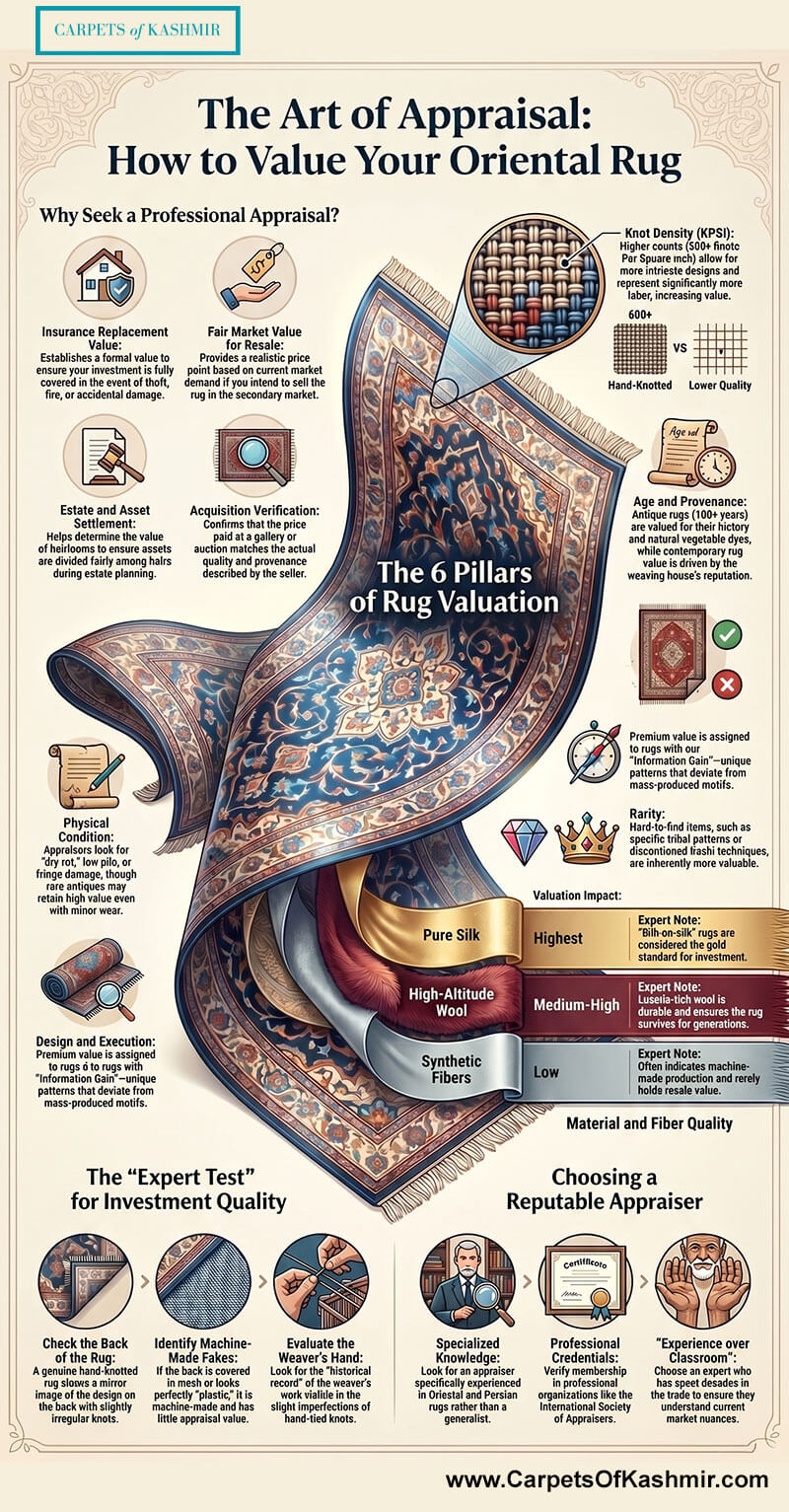
Expert Tip: How to Spot an Investment Piece
By Rohit Sharma
If you want to quickly test a rug’s value, look at the back. In a genuine hand-knotted rug, the design on the back is a mirror image of the front, and the knots will be slightly irregular. If the back is covered in a mesh or looks perfectly “plastic,” it is machine-made and has little appraisal value.
How to Find a Reputable Rug Appraiser
It is important to find an appraiser who specializes in Oriental and Persian rugs, rather than a general antique appraiser.
-
Check Credentials: Look for membership in professional organizations like the International Society of Appraisers.
-
Experience Matters: Choose an expert who has spent decades in the trade, not just in the classroom.
-
Local Reputation: Visit established experts. At Carpets of Kashmir, we have maintained our reputation for transparency and quality at the World Trade Center, Mumbai, for over 40 years.
Ready to Evaluate Your Rug?
Whether you are holding an heirloom or looking to commission a new masterpiece, understanding value starts with the right data.
Explore our In-Stock Collections or Contact Rohit Sharma for an expert consultation today.
